Special exhibition by the Archives of the Hanseatic City of Lübeck at the European Hansemuseum
Quite Privileged!
Lübeck and its Imperial Immediacy
18 May to 23 August 2026
What does it actually mean to be ‘quite privileged’? Both in the past and today, there have been and continue to be privileges and special rights for certain individuals and groups. But entire cities could also be granted special privileges – and Lübeck was one such city. Thanks to the Charter of Imperial Immediacy issued in 1226, the city enjoyed a privileged position compared to its neighbours for centuries. Moreover, the charter, with its numerous provisions, continues to shape the Hanseatic city to some extent even today.
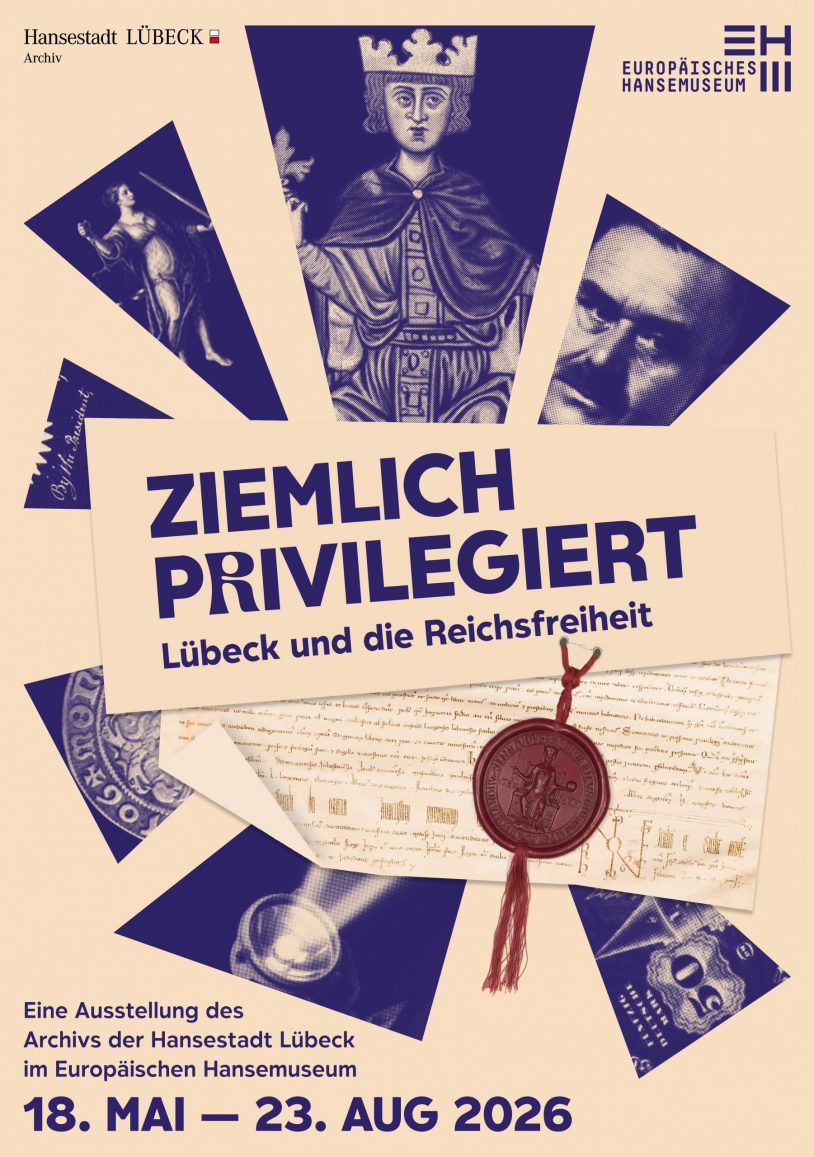
Why was this document, now 800 years old, invoked in 1925 to settle a dispute between fishermen from Lübeck and Mecklenburg? Why did towns such as Kiel and Rostock turn to Lübeck councillors for rulings on complex legal matters in the Middle Ages? And what exactly was Thomas Mann referring to when, in a lecture, he sought to define Lübeck as a ‘spiritual way of life’?
This special exhibition explores these and many other questions through numerous objects from the past and present. It sheds light on the various consequences of Lübeck’s privileged status and examines the impact the Charter of Imperial Immediacy had on the city of Lübeck, municipal law, the economy and the development of a distinct ‘Lübeck’ identity.
Information:
- Languages: German / English
- accessible to pedestrians and wheelchairs
- Regular curator-led tours (in German)
- Series of lectures »Ziemlich viel Freiheit«
Entrance fees:
- Adults: € 8
- Reduced: € 5 (Lübeck city guides)
- Free admission: Children under 18 years, trainees, students, Lübeck Card holders, severely disabled persons over 50%, accompanying person of a severely disabled person, members of ICOM and Deutscher Museumsbund, refugees, staff at Lübeck’s museums, visitors on their birthdays
- Guided tours: included in the admission price
Tickets
Zukunftslabor
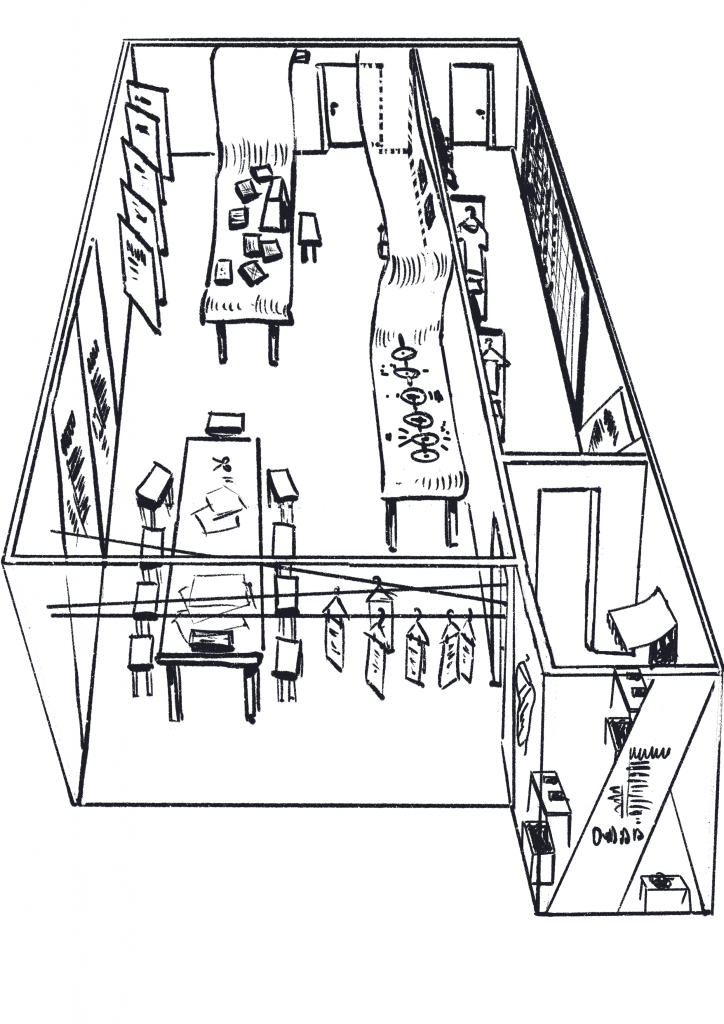
Ein Raum für Workshops und Schulprogramme
Der Höhepunkt der Ausstellung ist das Zukunftslabor: Textilien und Mode haben als Konsumobjekt und Identitätsmarker nicht an Bedeutung verloren. Gleichzeitig sind sie gegenwärtig aber auch zum Symbol für Verschwendung und einer Wegwerfgesellschaft geworden. Wie können wir unseren Bedarf an Textilien und unseren Spaß an der Mode mit einer fairen, gesunden Welt in Einklang bringen? Ist Globalisierung eine Gefahr oder bietet sie auch Chancen und Lösungen? Der Rundgang durch das Zukunftslabor mit vielen Multimedia – und Workshopangeboten bietet Informationen, Tipps und Interaktionen rund um das Thema »nachhaltiges Textil-Konsumverhalten«.
Abbildung: Ein Raum für Workshops und Schulprogramme.
Entwurf: LIQUID | Agentur für Gestaltung
Das Lebende Buch
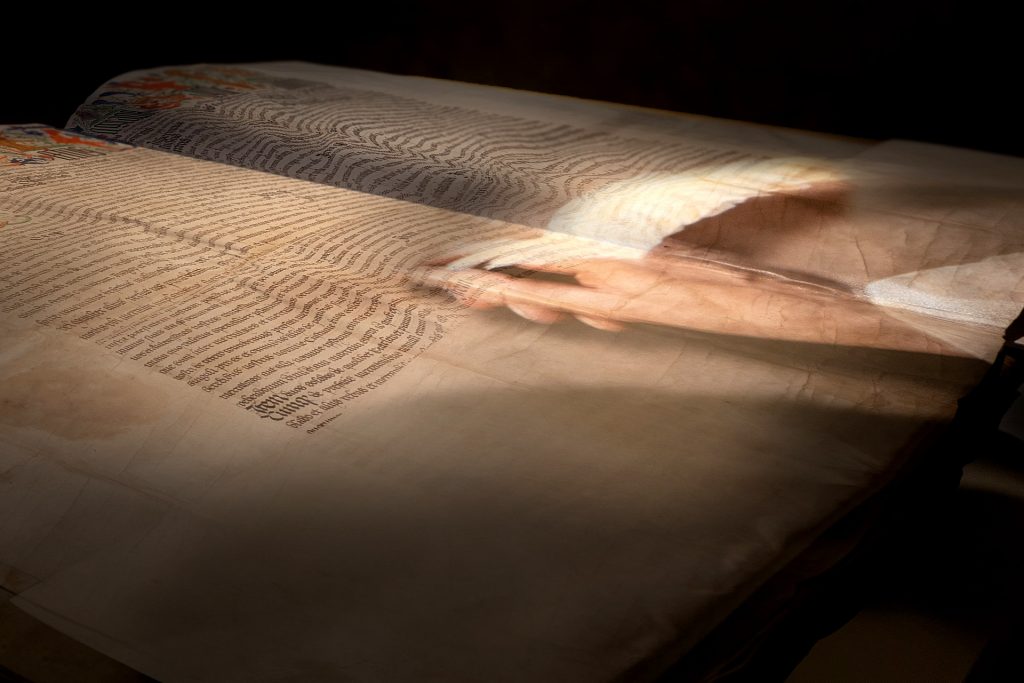
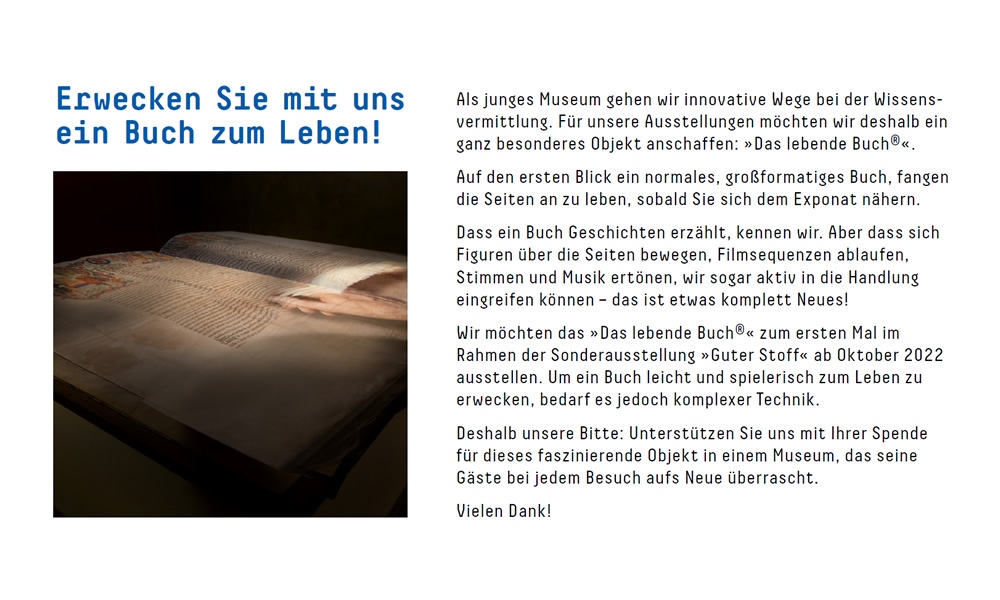
Dass ein Buch Geschichten erzählt, kennen wir. Aber dass sich dabei Figuren durch die Seiten bewegen, Bilder aus dem Buch heraus den Raum erobern, Stimmen und Musik ertönen, wir sogar aktiv in die Handlung eingreifen können – das wird ein komplett neues (Lese-)Erlebnis im Europäischen Hansemuseum.
Unser »Lebendes Buch« nimmt die Besucher:innen mit auf eine spannende Textil-Handelsreise durch das Mittelalter. Es geht um den Tuchhandel und damit verbundene Privilegien, Regulierung, Betrug, Konflikte und Boykotte – und den Einfluss der Hanse hierauf. Ein ebenso komplexes wie faszinierendes Thema, lassen sich doch viele Parallelen zu aktuellen Entwicklungen ziehen.